
Air Canada Flights Cancelled Hundreds Nationwide
- Happyfares

- Aug 19, 2025
- 7 min read
Updated: Nov 15, 2025
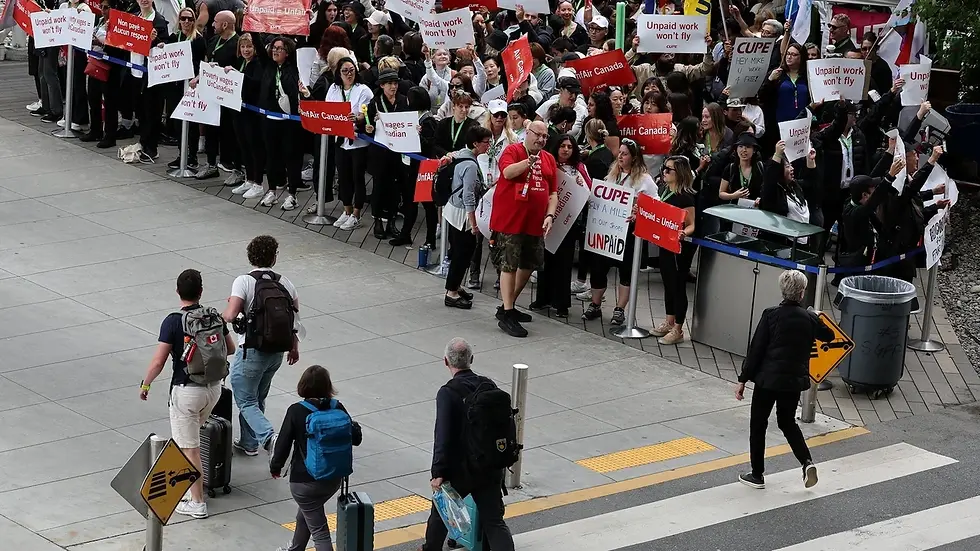
Air Canada faces its biggest flight cancelation crisis as 10,000 flight attendants defied a government back-to-work order. The flagship carrier air canada Airlines flights cancelled all operations across the country, which created unprecedented travel disruptions. Air Canada canceled more than 2,300 flights in the last week alone—1,153 domestic and 1,165 international.
The numbers reveal a devastating situation. Airlines flights cancelled have affected an estimated 500,000 passengers, and about 130,000 travelers face disruptions daily. The airline withdrew its financial guidance while the strike continues to threaten its stability. This crisis stands as one of the most important flight cancelation events in recent Canadian aviation history and affects both domestic travelers and international passengers heading to and from the country.
After Air Canada Flights Cancelled After Union Defies Back-to-Work Order
Air Canada and its flight attendants' labor dispute reached a critical point as operations stopped at 01:30 EDT on August 16, 2025. The airline shut down completely and suspended more than 700 flights after contract negotiations failed.
10,000 flight attendants walk off the job
Around 10,000 cabin crew members abandoned their posts early Saturday morning. The mass action came after months of unsuccessful talks between the airline and the Canadian Union of Public Employees (CUPE) about wages and unpaid work. The union's members showed overwhelming support with 99.7% voting to strike.
Government imposes binding arbitration
Federal Minister of Jobs and Families Patty Hajdu stepped in within 12 hours of the strike's start. She directed the Canadian Industrial Relations Board (CIRB) to enforce binding arbitration. The government's order under section 107 of the Canada Labor Code extended the previous collective agreement that had expired on March 31, 2025. The CIRB ordered Air Canada to restart operations and flight attendants to return to work by 14:00 EDT on August 17.
Union refuses to comply with CIRB ruling
CUPE leadership took a bold stance and defied the back-to-work order, calling it "blatantly unconstitutional". Union officials stood firm and announced they would continue striking until reaching a negotiated settlement. CUPE's national president Mark Hancock made his position clear during a news conference: "If it means folks like me going to jail, then so be it".
The CIRB held an emergency hearing on August 17 and labeled the ongoing strike "unlawful". CUPE stood its ground and filed an application with the Federal Court of Canada to challenge the order. The situation affected an estimated 500,000 customers as all Air Canada and Air Canada Rouge flights stayed canceled until 16:00 EDT on August 19.
Air Canada Suspends Financial Forecasts Amid Operational Shutdown
Air Canada faces drastic measures about its financial outlook due to the widespread flight cancelation crisis. The airline officially suspended its financial guidance for both the third quarter and full year 2025 on August 18, 2025. This decision came from the "effects of the labor disruption and related impact on operations".
Third-quarter and full-year guidance withdrawn
Air Canada had projected optimistic financial results before the work stoppage. The carrier planned to increase capacity by 3.25-3.75% in the third quarter compared to last year. The airline's full-year adjusted EBITDA (Earnings Before Interest, Taxes, Depreciation, and Amortization) forecast between C$3.6 billion and C$4 billion now stands withdrawn as operations remain shut down.
This flight cancelation crisis hits Air Canada's financial health at the worst possible time. The airline typically sees its most profitable quarter during this period. The strike costs the airline between C$60-70 million in lost revenue each day. Royal Bank of Canada's stock analyst James McGarragle estimates that Air Canada's profit before taxes and other expenses will drop by about C$70 million for each week of the strike.
Stock market reaction and investor concerns
The operational shutdown has triggered negative responses from investors. Air Canada's shares fell nearly 3% after announcing the suspended guidance. The airline faced this decline while already dealing with lower profitability from reduced U.S. bookings.
The crisis affects more than just Air Canada.
The Newfoundland and Labrador government and Hospitality NL released a joint statement about the "catastrophic" impact on tourism during peak summer season. Regional small businesses and tourism operators claim they cannot handle any service reductions.
Air Canada's CEO Michael Rousseau remains hopeful for a quick resolution despite the major disruption to the airline's 700 daily flights. Company officials warn that restarting operations fully could take up to a week after settlement, which extends the crisis's financial impact further.
How Many Flights Are Canceled and Who Is Affected?

Air Canada's flight attendant strike continues to wreak havoc as passengers remain stranded at airports throughout Canada and internationally. Transportation experts call this one of the biggest flight cancelation events Canadian aviation has seen.
Over 2,300 flights canceled in one week
The operational shutdown stands without precedent. Aviation data firm Cirium reports Air Canada canceled more than 2,300 flights in the last week alone. These numbers include 1,153 domestic and 1,165 international flights. The airline started canceling hundreds of flights before the strike deadline. Sunday saw 738 canceled flights, with nearly 400 more following on Monday. By Monday afternoon, Air Canada had canceled 550 additional flights.
500,000 passengers impacted nationwide
The strike's effect on travelers has been massive. Air Canada reports roughly 500,000 customers faced canceled flights since the strike started. This means about 130,000 passengers face disruptions each day during the work stoppage. Passengers struggle to rebook their trips. A Vancouver passenger waited five days for rebooking at his own expense. Another traveler heading to India's wedding paid extra money to route through Dallas and Qatar.
Domestic vs international flight disruptions
Cancelations hit both domestic and international services equally hard. The 2,300+ canceled flights split almost evenly between 1,153 domestic and 1,165 international routes. FlightAware tracked 124 flight cancelations at Vancouver International Airport within 24 hours. Cities across Canada and worldwide destinations saw cancelations of arriving and departing Air Canada flights.
Air Canada flights canceled today: real-time data
Air Canada and Air Canada Rouge flights remain grounded until at least 16:00 EDT on August 19, 2025. The airline usually runs about 700 flights daily, all now suspended. Air Canada warns affected customers to avoid airports unless they hold confirmed tickets on other carriers. Canceled flight passengers can request full refunds through the airline's website or mobile app. Rebooking options exist but remain limited during peak summer travel season.
Why Are Flight Attendants Striking and What’s at Stake?
The Air Canada flight cancelation crisis stems from a heated dispute about how flight attendants get paid. Flight attendants stopped working because they don't receive pay during boarding time. This has become a breaking point after months of talks went nowhere.
The issue of unpaid boarding time
Air Canada flight attendants work about 75 minutes of boarding duties per flight without any pay. Their union says members end up working up to 35 unpaid hours every month - that's like working a full week for free.
Comparison with U.S. airline boarding pay policies
U.S. carriers handle boarding pay much differently than Air Canada. American Airlines gives their flight attendants half their regular pay rate during boarding. United Airlines pays full wages, and Delta Air Lines started doing the same in 2022. These differences show how far behind Canadian standards have fallen.
Union demands and industry-wide implications
The union wants more than just boarding pay. They're asking for a 15% wage bump over four years, better schedules, and improved working conditions. This fight could change how airlines pay their staff all over North America.
Support from international flight attendant unions
Flight attendants around the world stand with Air Canada's cabin crew. Unions from United, Delta, and American Airlines have backed CUPE openly. They see this as a crucial battle to get fair pay throughout the aviation industry.
Conclusion
The ongoing labor dispute between Air Canada and its flight attendants has created waves across the Canadian aviation sector. More than 2,300 flights have been canceled, which has left about 500,000 passengers stuck during the busiest travel season. The airline loses C$60-70 million each day, and its stock prices have dropped 3% after it suspended its quarterly and annual financial forecasts.
The biggest problem is unpaid boarding time. Flight attendants work up to 35 extra hours every month without getting paid. U.S. carriers already pay their staff for boarding time at different rates, which shows how far behind Canadian practices have fallen in North America. Flight attendants on strike have strong support from international airline unions. They haven't backed down even after the government tried to force them back to work through binding arbitration.
CUPE leaders and federal officials are locked in an unprecedented battle. Union leaders would rather go to jail than give up their fight for fair pay. The effects of this strike go way beyond Air Canada's operations. Tourism hotspots like Newfoundland and Labrador are suffering badly during their key summer season.
Air Canada's executives hope to end this quickly. They admit it could take up to a week to get flights back to normal after any deal. Thousands of travelers face an uncertain situation as this historic strike continues. This dispute could change how airlines pay their staff for years to come.
Key Takeaways
Air Canada's unprecedented labor crisis has created one of the most significant flight disruptions in Canadian aviation history, with far-reaching consequences for travelers and the airline industry.
• Over 2,300 flights canceled affecting 500,000 passengers as 10,000 flight attendants defy government back-to-work orders in dispute over unpaid boarding time.
• Daily losses of C$60-70 million force Air Canada to suspend financial guidance while stock drops 3% amid operational shutdown.
• Union refuses binding arbitration despite federal intervention, with leaders willing to face imprisonment rather than abandon demands for fair compensation.
• Unpaid boarding time at center of dispute - flight attendants work 35 hours monthly without pay while U.S. carriers provide 50-100% compensation for similar duties.
• Full recovery could take up to one week after any settlement, extending travel disruptions well beyond the strike's end.
This labor standoff represents a pivotal moment that could reshape compensation standards across the North American aviation industry, as international flight attendant unions rally behind Air Canada's cabin crew in their fight for equitable pay practices.
FAQs
Q1. How many Air Canada flights have been canceled due to the strike?
A. Over 2,300 flights have been canceled in the past week, including both domestic and international routes. This represents one of the most significant flight cancelation events in recent Canadian aviation history.
Q2. What is the main reason for the flight attendants' strike?
A. The primary issue is unpaid boarding time. Air Canada flight attendants currently receive no compensation for approximately 75 minutes of pre-flight boarding duties per flight, resulting in up to 35 unpaid hours monthly.
Q3. How many passengers have been affected by the flight cancelations?
A. Approximately 500,000 passengers have been impacted by the canceled flights since the strike began, with roughly 130,000 travelers affected each day of the ongoing work stoppage.
Q4. What is the financial impact of the strike on Air Canada?
A. The airline is facing daily revenue losses between C$60-70 million. Air Canada has suspended its financial guidance for both the third quarter and full year 2025, and its stock price has dropped by 3%.
Q5. How long might it take for Air Canada to resume normal operations after the strike ends?
A. Company officials have warned that fully restarting operations could take up to a week after a settlement is reached, extending the impact of this crisis beyond the immediate strike period.


Comments